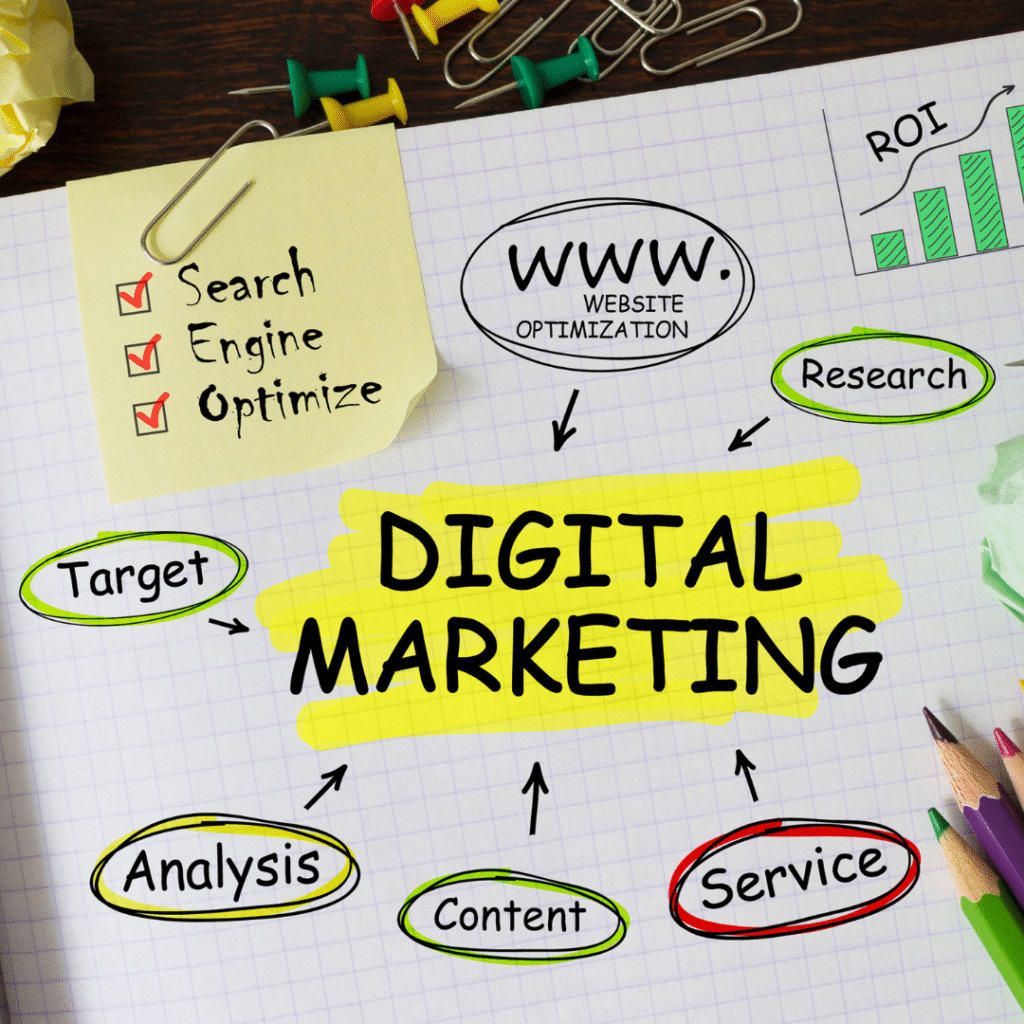
Digital marketing is the process of promoting products or services through online platforms such as websites, search engines, social media, email, and mobile apps. Instead of using traditional methods like posters, banners, pamphlets, newspapers , radio, television, ,businesses use the internet to connect with people who are already active online.
- Digital Marketing means doing marketing through the Internet.
- It helps to promote products and services online.
- We can reach people by using Mobile Phones, computers and social media.
- Its Cost less Money than Traditional Marketing
- We can check the results easily,like how many people saw or liked our ads.
The terms digital marketing and “online marketing” are often used in the same way, but there is a small difference between them. Digital marketing includes all types of promotion done through digital platforms, such as social media, mobile apps, and television. Online marketing, however, only refers to marketing activities that are carried out using the internet. Even though the difference is sometimes unclear, online marketing is generally seen as a part of digital marketing.
Types of Digital Marketing
Digital marketing can be done in many simple ways, such as using websites, social media, and online content. Some of the most common types of digital marketing include:- Search Engine Optimization (SEO)
- Social Media Marketing (SMM)
- Content Marketing
- Email Marketing
- Influencer Marketing
- Affiliate Marketing
- Pay Per Click (PPC)
- Search Engine Optimization (SEO)- it is a process of optimising webpage with the help of keyword by following the search engine algorithm and make webpages rank on top of SERP ( Search Engine Research Page)
Type Of SEO
- On- page SEO- it is Process in which web pages are optimized on the web site with the help of keyword and make web pages relevant
- Off – page SEO- in this SEO is done outsite of the website in which link building process is executive other reported web site to our website through content marketing
- Technical SEO- Technical SEO is the process of optimizing the technical aspects of a website to improve its search engine rankings. It involves making changes to a website’s architecture, coding, and other technical elements to make it easier for search engines to crawl and index the site’s pages.
- Social Media Marketing (SMM)- is using social media platform like facebook, instagram, linkedin, snapchat to connect with audience build brands, website traffic, and increase sales by creating and sharing content (post,video,reels,stories) and running target ads
3.Content Marketing-is a process marketing in which relevant,valuable, and consistent content is delivered to retain the customer. There are 12 types of content marketing such as-
1 Blogging
2 Infographic
3 Video
4 Emailers
5 Case Studies
6 Memes
7 Webinor
8 Influence Marketing
9 Research Journal
10 Podcast
11 E-Book
12 White papers
- Email Marketing- Email marketing is the use of email to promote products or services, as well as incentivize customer loyalty. It is a form of marketing that can make the customers on your email list aware of new products, discounts, and other services. Email marketing is one of the most effective and popular marketing tools
4.Influencer Marketing-Influencer marketing is a collaboration between popular social-media users and brands to promote brands’ products or services. These partnerships have been going on informally since the dawn of social media.
- AffiliateMarketing- Affiliate marketing means promoting someone else’s products to earn a small commission.
- You share a special link — if someone buys using your link, you earn money.
- Common platforms: Amazon, Flipkart, Meesho, ClickBank etc.
- It needs no product of your own, just promotion skills.
- Pay Per Click (PPC)- marketing is an online advertising model where advertisers pay publishers when users click their ads. Advertisers bid on the value of clicks based on keywords, platforms, and target audiences.PPC (pay-per-click) marketing is an online advertising model where advertisers pay publishers when users click their ads. Advertisers bid on the value of clicks based on keywords, platforms, and target audiences.
How Digital Marketing Looks in 2026
Digital marketing in 2026 is more mature and practical. Customers are no longer impressed by flashy ads alone. They want clarity, value, and authenticity. Businesses that speak clearly and provide helpful information perform better than those that only push sales messages.
Technology has improved, but successful marketing still depends on understanding people. Brands that take time to listen to their audience, answer questions, and share real experiences stand out more than those that blindly follow trends.
In simple terms, digital marketing in 2026 feels more human.
Benefits of Digital Marketing in 2026
1. Affordable Marketing for Small and Large Businesses
One of the biggest advantages of digital marketing is that it does not require a huge budget to start. Small businesses can promote their services without spending large amounts of money on traditional advertising.
In 2026, businesses can choose how much they want to spend and adjust their approach based on performance. This makes digital marketing suitable for startups, local shops, service providers, and large companies alike.
2. Reaching the Right People
Digital marketing allows businesses to reach people who are actually interested in their products or services. Instead of showing ads to random audiences, brands can focus on users based on location, interests, or online behavior.
This helps businesses avoid wasted effort and communicate with people who are more likely to respond.
3. Clear Understanding of What Works
One major reason businesses prefer digital marketing is clarity. Business owners can see which campaigns bring visitors, which posts get attention, and which pages lead to inquiries or sales.
This helps businesses make smarter decisions instead of relying on guesswork. Over time, marketing becomes more focused and effective.
4. Stronger Connection with Customers
Digital marketing allows direct interaction with customers. People can comment on posts, reply to emails, send messages, and share feedback instantly.
In 2026, customers expect brands to respond quickly and communicate honestly. Businesses that engage regularly build stronger relationships and earn trust. This trust often turns first-time buyers into repeat customers
Conclusion
Digital marketing has become an essential part of modern business. It allows companies to promote their products and services through online platforms where people spend most of their time. From search engines and social media to email and paid advertising, digital marketing offers multiple ways to connect with the right audience.
In 2026, digital marketing is not just about advertising but about building trust and providing value. Businesses that focus on clear communication, helpful content, and genuine interaction achieve better long-term results. This is where experienced digital marketing teams play an important role.
At Digielites the focus is on using practical digital marketing strategies that help businesses grow steadily and connect with their audience in a meaningful way. By choosing the right mix of digital marketing methods, businesses can improve visibility, build strong customer relationships, and succeed in the competitive online space.